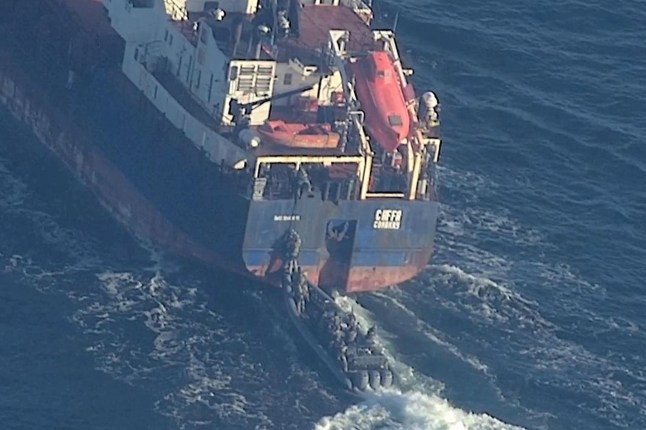
Swedish Coastguard are seen boarding the Caffa. The Kremlin has so far dodged commenting on the shadow fleet (Picture: AP)
A cargo ship feared part of Russia’s ‘shadow fleet’ has been boarded in the Baltic Sea.
The Swedish Coast Guard said during a news conference that the crew of the Caffa is predominantly Russian,and the ship is on Ukraine’s sanctions list.
The Caffa was also allegedly sailing under a false flag when Swedish authorities boarded it in Swedish territorial waters Friday to search it and conduct interviews,national broadcaster TT reported.
It had been sailing under a Guinean flag.
Authorities are concerned about its seaworthiness and a person is under criminal investigation.
Other details about the Caffa and its crew were not immediately available.
Sweden last year said it would step up insurance checks on foreign ships in a move aimed at tightening controls on Russia’s so-called ‘shadow fleet’ of aging ships,which are used to transport oil and gas or to carry stolen Ukrainian grain.
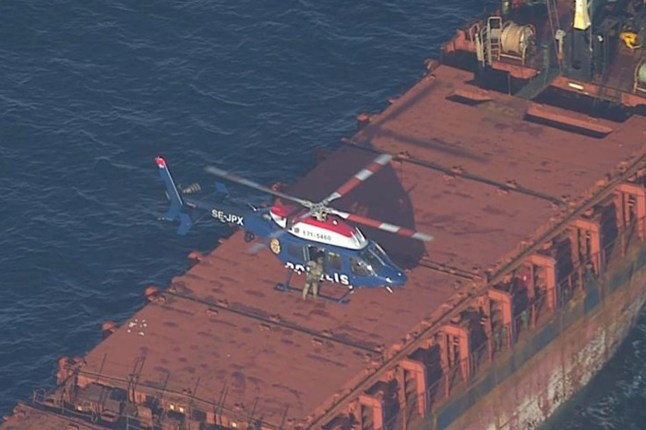
A helicopter lands on the Caffa to begin investigations (Picture: AP)
The average age of the vessels is around 18 years,meaning they’re near the end of their life span and are more vulnerable to accidents,especially if they’re not well-maintained.
The government in Stockholm last year tasked the Coast Guard and the Swedish Maritime Administration with collecting insurance information not just from ships that call at Swedish ports,but also those that pass through the country’s territorial waters and exclusive economic zone.
Authorities have not said whether they believe the Caffa is part of the shadow fleet.
The shadow fleet is made up of aging tankers bought used,often by nontransparent entities with addresses in non-sanctioning countries such as the United Arab Emirates or the Marshall Islands,and flagged in places like Gabon or the Cook Islands.
Some of the vessels are owned by the Russian state Sovcomflot shipping company. Their role is to help Russia’s oil exporters elude the $60 per barrel price cap imposed by Ukraine’s allies.
Estimates vary,but S&P Global and the Kyiv School of Economics Institute have put the number at over 400 ships that can transport oil,or products made from crude such as diesel fuel and gasoline.
The shadow fleet in fact isn’t all that shadowy. The ships don’t hide their stops at Russian oil terminals. Some have direct connections to Russia,as with the vessels owned by Sovcomflot.
In other cases,it’s often unclear who exactly is behind the listed owners,and what kind of safety practices and insurance the vessels have. What sets them apart is that they transport Russian oil and operate outside the jurisdictions of the sanctioning G7 countries.

Explore our curated content, stay informed about groundbreaking innovations, and journey into the future of science and tech.
© ArinstarTechnology
Privacy Policy